Why a Manicure Looks Different with Different Technicians
Many clients notice that the same nail shape or color can look completely different when done by different technicians. The reason lies not only in the products used, but mainly in technique, preparation, experience, and individual working style. Even small variations in execution can noticeably change the final result – from the shape of the cuticle line to the overall balance and durability.
A manicure is not a standardized product, but a form of precise craftsmanship. Every movement of the file, every brush stroke, and every layer thickness influences the visual outcome.
Nail plate preparation as the foundation
Quality begins with proper preparation. Dehydration, gentle buffing, correct removal of invisible cuticle, and the choice of primer or bonding agents determine how evenly and securely the product adheres. Differences at this stage already lead to variations in shine, color depth, and longevity.
Technique and precision in shape and cuticle area
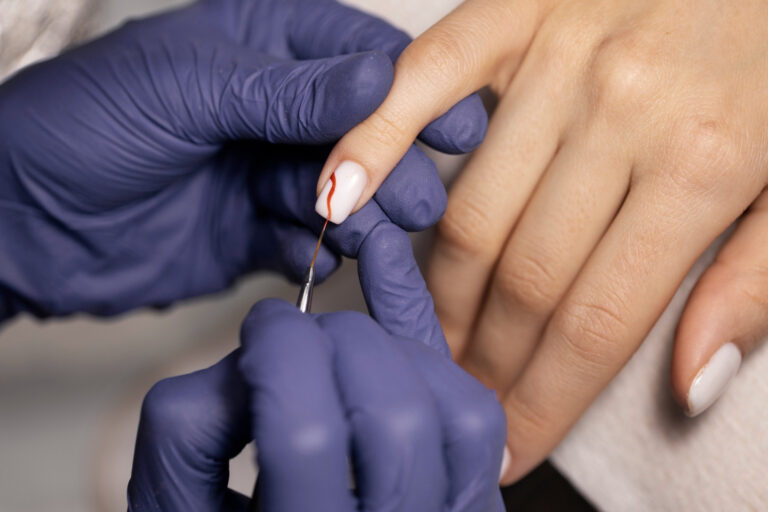
Clean cuticle lines, symmetry, and accurate form define whether a manicure looks refined or rough. Slight differences in filing angles or brush control can visually change the proportions of the entire nail.
Layer thickness and material control
Too thick layers of base, color, or top coat can make the nail appear bulky, while layers that are too thin may affect coverage and durability. Experienced technicians control the material flow and build the structure so the nail looks balanced and natural.
Curing process and technical equipment
The power of the UV/LED lamp, correct curing time, and hand positioning during polymerization influence gloss, color stability, and overall strength. Even with identical products, different equipment can produce noticeably different results.
Consideration of the individual nail type
Soft, thin, or dehydrated nails require different techniques than dense and strong nail plates. If the individual condition is not taken into account, the finish may appear uneven or lose its shine more quickly.
Experience and aesthetic perception
Each technician develops a personal sense of proportion, line, and balance over time. This professional signature is one of the main reasons why even identical designs never look exactly the same when performed by different masters.
Common reasons for visible differences
- different levels of nail plate preparation
- variations in filing and cuticle techniques
- unequal layer thickness of products
- differences in lamp power and curing accuracy
- lack of adaptation to the individual nail type
Key points on why manicure results vary
- Manicure is precise manual work, not mass production.
- Preparation and technique define the final look.
- Material control affects shape, gloss, and durability.
- The nail type requires individual adaptation.
- Experience and personal style shape the end result.
FREQUENTLY ASKED QUESTIONS
Why does gel polish last differently with different technicians?
Durability largely depends on nail preparation, layer thickness, and correct curing in the lamp.
Is the difference caused more by products or by technique?
In most cases, technique and precision have a greater impact than the brand of the product.
Why do cuticle lines look cleaner in some manicures?
This depends on the accuracy of cuticle preparation and the control of product application near the skin.
Can the natural nail type influence the final look?
Yes. Soft or moisture-rich nails behave differently than dense, strong nail plates and require adjusted techniques.
How can you recognize a high-quality manicure?
By symmetrical shape, clean cuticle lines, even surface, natural shine, and stable wear.