Karlstraße 43, 80333 München Ohlstadter Str. 52, 81373 München

Karlstraße 43, 80333 München Ohlstadter Str. 52, 81373 München
When and Why an E-File French Correction Is Needed
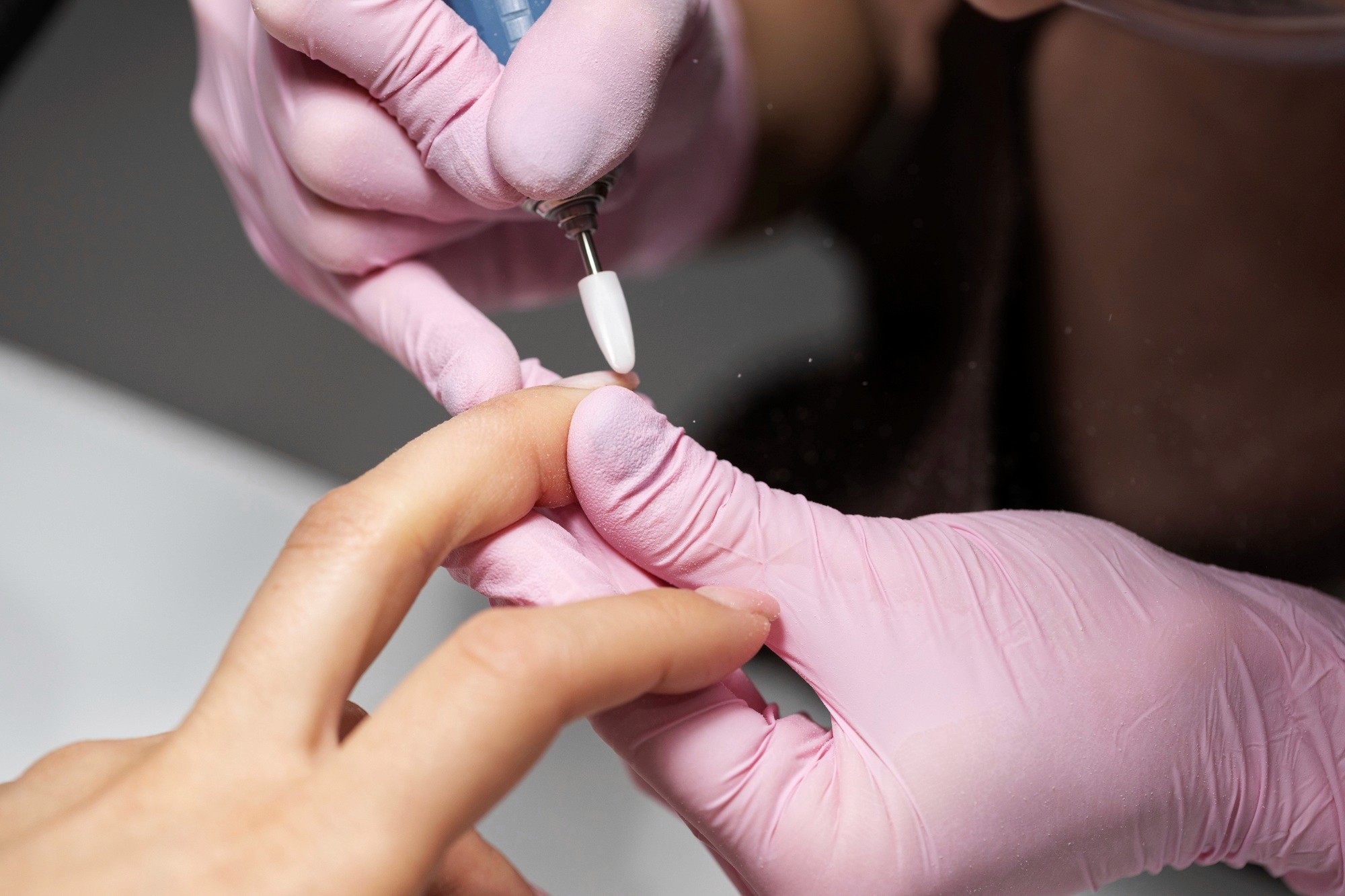
The classic French look remains one of the most iconic nail designs — timeless, elegant, and suitable for any occasion. However, to keep the crisp white tip and the natural nail bed color looking clean and flawless, regular corrections are essential. One of the most effective methods is the e-file French correction, where professional electric nail drill bits are used to renew and perfect the French design.
At MONLIS Schule Munich, aspiring nail artists learn how to work efficiently, precisely, and gently with this method — and why an e-file correction dramatically enhances the quality and durability of a French manicure.
Why French Nails Require a Specialized Correction Technique
French nails are characterized by sharp contrasts, clean lines, and a perfectly defined smile line. Even small imperfections or regrowth can disrupt the entire look.
An e-file French correction becomes necessary when:
the natural regrowth becomes visible
the white tip loses sharpness
the material becomes uneven
the transition between nail bed and tip becomes blurry
the design looks dull or untidy due to daily wear
With the correct technique, the design can be refreshed without over-filing or removing too much product.
Key Benefits of an E-File French Correction
1. Precision and Clean Smile Lines
The e-file allows the old French surface to be removed with high accuracy. This redefines the smile line, making it sharp, symmetrical, and elegant.
2. Gentle on the Natural Nail
Only the necessary material is worked on — without unnecessary pressure or damage to the natural nail plate.
3. Even and Stable Structure
The technique restores the architecture of the nail, ensuring evenness and long-lasting stability.
4. Faster Yet Higher-Quality Results
Modern professional bits make the correction faster than manual filing, while ensuring consistency and accuracy.
5. Ideal Base for New Designs
Clean, smooth and refined — the e-file prep creates the perfect canvas for a renewed French design or any other style.
When Is the Right Time for an E-File French Correction?
Natural nails grow about 1–2 mm per week, which means that after 2–3 weeks the French tip has shifted forward.
You should schedule a correction when:
the smile line moves out of its ideal position
the product grows too close to the cuticle
the nail looks visually heavy or unbalanced
the tip becomes dull or uneven
the transition between the nail bed and tip becomes unclear
At MONLIS Schule, students learn to analyze these signs and select the optimal drill bits for each correction stage.
How a Professional E-File French Correction Works
1. Assessment of the Existing Model
The nail artist evaluates structure, balance, transition, and stability.
2. Removing the Old French Layer
A ceramic or carbide bit is used to gently remove the old tip.
3. Perfecting the Smile Line
Uneven areas are corrected and the smile line is sharpened and redefined.
4. Rebuilding the Structure
New product layers are applied to restore the proper architecture and proportions.
5. Finishing and Smoothing
A polishing bit refines the surface and prepares it for the new French design.
Students at MONLIS Schule practice each stage in detail to gain confidence, speed, and precision.
Why Training in This Technique Is Essential
E-file French correction requires mastery of many technical elements:
correct rotation speed
choosing the right drill bits
controlling pressure and movement
creating a precise smile line
understanding product behavior
These skills cannot be mastered without professional training.
At MONLIS Schule Munich, students learn how to:
work quickly and safely
prevent common mistakes
shape and structure the product correctly
achieve long-lasting, elegant results
handle professional equipment confidently
The e-file French correction is a modern, precise, and efficient method for maintaining clean lines, aesthetic transitions, and stable nail architecture.
Thanks to the training offered by MONLIS Schule Munich, nail artists can master this technique and deliver flawless, elegant French nails to their clients — every time.
The classic French look remains one of the most iconic nail designs — timeless, elegant, and suitable for any occasion. However, to keep the crisp white tip and the natural nail bed color looking clean and flawless, regular corrections are essential. One of the most effective methods is the e-file French correction, where professional electric nail drill bits are used to renew and perfect the French design.
At MONLIS Schule Munich, aspiring nail artists learn how to work efficiently, precisely, and gently with this method — and why an e-file correction dramatically enhances the quality and durability of a French manicure.
Why French Nails Require a Specialized Correction Technique
French nails are characterized by sharp contrasts, clean lines, and a perfectly defined smile line. Even small imperfections or regrowth can disrupt the entire look.
An e-file French correction becomes necessary when:
the natural regrowth becomes visible
the white tip loses sharpness
the material becomes uneven
the transition between nail bed and tip becomes blurry
the design looks dull or untidy due to daily wear
With the correct technique, the design can be refreshed without over-filing or removing too much product.
Key Benefits of an E-File French Correction
1. Precision and Clean Smile Lines
The e-file allows the old French surface to be removed with high accuracy. This redefines the smile line, making it sharp, symmetrical, and elegant.
2. Gentle on the Natural Nail
Only the necessary material is worked on — without unnecessary pressure or damage to the natural nail plate.
3. Even and Stable Structure
The technique restores the architecture of the nail, ensuring evenness and long-lasting stability.
4. Faster Yet Higher-Quality Results
Modern professional bits make the correction faster than manual filing, while ensuring consistency and accuracy.
5. Ideal Base for New Designs
Clean, smooth and refined — the e-file prep creates the perfect canvas for a renewed French design or any other style.
When Is the Right Time for an E-File French Correction?
Natural nails grow about 1–2 mm per week, which means that after 2–3 weeks the French tip has shifted forward.
You should schedule a correction when:
the smile line moves out of its ideal position
the product grows too close to the cuticle
the nail looks visually heavy or unbalanced
the tip becomes dull or uneven
the transition between the nail bed and tip becomes unclear
At MONLIS Schule, students learn to analyze these signs and select the optimal drill bits for each correction stage.
How a Professional E-File French Correction Works
1. Assessment of the Existing Model
The nail artist evaluates structure, balance, transition, and stability.
2. Removing the Old French Layer
A ceramic or carbide bit is used to gently remove the old tip.
3. Perfecting the Smile Line
Uneven areas are corrected and the smile line is sharpened and redefined.
4. Rebuilding the Structure
New product layers are applied to restore the proper architecture and proportions.
5. Finishing and Smoothing
A polishing bit refines the surface and prepares it for the new French design.
Students at MONLIS Schule practice each stage in detail to gain confidence, speed, and precision.
Why Training in This Technique Is Essential
E-file French correction requires mastery of many technical elements:
correct rotation speed
choosing the right drill bits
controlling pressure and movement
creating a precise smile line
understanding product behavior
These skills cannot be mastered without professional training.
At MONLIS Schule Munich, students learn how to:
work quickly and safely
prevent common mistakes
shape and structure the product correctly
achieve long-lasting, elegant results
handle professional equipment confidently
The e-file French correction is a modern, precise, and efficient method for maintaining clean lines, aesthetic transitions, and stable nail architecture.
Thanks to the training offered by MONLIS Schule Munich, nail artists can master this technique and deliver flawless, elegant French nails to their clients — every time.
The classic French look remains one of the most iconic nail designs — timeless, elegant, and suitable for any occasion. However, to keep the crisp white tip and the natural nail bed color looking clean and flawless, regular corrections are essential. One of the most effective methods is the e-file French correction, where professional electric nail drill bits are used to renew and perfect the French design.
At MONLIS Schule Munich, aspiring nail artists learn how to work efficiently, precisely, and gently with this method — and why an e-file correction dramatically enhances the quality and durability of a French manicure.
Why French Nails Require a Specialized Correction Technique
French nails are characterized by sharp contrasts, clean lines, and a perfectly defined smile line. Even small imperfections or regrowth can disrupt the entire look.
An e-file French correction becomes necessary when:
the natural regrowth becomes visible
the white tip loses sharpness
the material becomes uneven
the transition between nail bed and tip becomes blurry
the design looks dull or untidy due to daily wear
With the correct technique, the design can be refreshed without over-filing or removing too much product.
Key Benefits of an E-File French Correction
1. Precision and Clean Smile Lines
The e-file allows the old French surface to be removed with high accuracy. This redefines the smile line, making it sharp, symmetrical, and elegant.
2. Gentle on the Natural Nail
Only the necessary material is worked on — without unnecessary pressure or damage to the natural nail plate.
3. Even and Stable Structure
The technique restores the architecture of the nail, ensuring evenness and long-lasting stability.
4. Faster Yet Higher-Quality Results
Modern professional bits make the correction faster than manual filing, while ensuring consistency and accuracy.
5. Ideal Base for New Designs
Clean, smooth and refined — the e-file prep creates the perfect canvas for a renewed French design or any other style.
When Is the Right Time for an E-File French Correction?
Natural nails grow about 1–2 mm per week, which means that after 2–3 weeks the French tip has shifted forward.
You should schedule a correction when:
the smile line moves out of its ideal position
the product grows too close to the cuticle
the nail looks visually heavy or unbalanced
the tip becomes dull or uneven
the transition between the nail bed and tip becomes unclear
At MONLIS Schule, students learn to analyze these signs and select the optimal drill bits for each correction stage.
How a Professional E-File French Correction Works
1. Assessment of the Existing Model
The nail artist evaluates structure, balance, transition, and stability.
2. Removing the Old French Layer
A ceramic or carbide bit is used to gently remove the old tip.
3. Perfecting the Smile Line
Uneven areas are corrected and the smile line is sharpened and redefined.
4. Rebuilding the Structure
New product layers are applied to restore the proper architecture and proportions.
5. Finishing and Smoothing
A polishing bit refines the surface and prepares it for the new French design.
Students at MONLIS Schule practice each stage in detail to gain confidence, speed, and precision.
Why Training in This Technique Is Essential
E-file French correction requires mastery of many technical elements:
correct rotation speed
choosing the right drill bits
controlling pressure and movement
creating a precise smile line
understanding product behavior
These skills cannot be mastered without professional training.
At MONLIS Schule Munich, students learn how to:
work quickly and safely
prevent common mistakes
shape and structure the product correctly
achieve long-lasting, elegant results
handle professional equipment confidently
The e-file French correction is a modern, precise, and efficient method for maintaining clean lines, aesthetic transitions, and stable nail architecture.
Thanks to the training offered by MONLIS Schule Munich, nail artists can master this technique and deliver flawless, elegant French nails to their clients — every time.
The classic French look remains one of the most iconic nail designs — timeless, elegant, and suitable for any occasion. However, to keep the crisp white tip and the natural nail bed color looking clean and flawless, regular corrections are essential. One of the most effective methods is the e-file French correction, where professional electric nail drill bits are used to renew and perfect the French design.
At MONLIS Schule Munich, aspiring nail artists learn how to work efficiently, precisely, and gently with this method — and why an e-file correction dramatically enhances the quality and durability of a French manicure.
Why French Nails Require a Specialized Correction Technique
French nails are characterized by sharp contrasts, clean lines, and a perfectly defined smile line. Even small imperfections or regrowth can disrupt the entire look.
An e-file French correction becomes necessary when:
the natural regrowth becomes visible
the white tip loses sharpness
the material becomes uneven
the transition between nail bed and tip becomes blurry
the design looks dull or untidy due to daily wear
With the correct technique, the design can be refreshed without over-filing or removing too much product.
Key Benefits of an E-File French Correction
1. Precision and Clean Smile Lines
The e-file allows the old French surface to be removed with high accuracy. This redefines the smile line, making it sharp, symmetrical, and elegant.
2. Gentle on the Natural Nail
Only the necessary material is worked on — without unnecessary pressure or damage to the natural nail plate.
3. Even and Stable Structure
The technique restores the architecture of the nail, ensuring evenness and long-lasting stability.
4. Faster Yet Higher-Quality Results
Modern professional bits make the correction faster than manual filing, while ensuring consistency and accuracy.
5. Ideal Base for New Designs
Clean, smooth and refined — the e-file prep creates the perfect canvas for a renewed French design or any other style.
When Is the Right Time for an E-File French Correction?
Natural nails grow about 1–2 mm per week, which means that after 2–3 weeks the French tip has shifted forward.
You should schedule a correction when:
the smile line moves out of its ideal position
the product grows too close to the cuticle
the nail looks visually heavy or unbalanced
the tip becomes dull or uneven
the transition between the nail bed and tip becomes unclear
At MONLIS Schule, students learn to analyze these signs and select the optimal drill bits for each correction stage.
How a Professional E-File French Correction Works
1. Assessment of the Existing Model
The nail artist evaluates structure, balance, transition, and stability.
2. Removing the Old French Layer
A ceramic or carbide bit is used to gently remove the old tip.
3. Perfecting the Smile Line
Uneven areas are corrected and the smile line is sharpened and redefined.
4. Rebuilding the Structure
New product layers are applied to restore the proper architecture and proportions.
5. Finishing and Smoothing
A polishing bit refines the surface and prepares it for the new French design.
Students at MONLIS Schule practice each stage in detail to gain confidence, speed, and precision.
Why Training in This Technique Is Essential
E-file French correction requires mastery of many technical elements:
correct rotation speed
choosing the right drill bits
controlling pressure and movement
creating a precise smile line
understanding product behavior
These skills cannot be mastered without professional training.
At MONLIS Schule Munich, students learn how to:
work quickly and safely
prevent common mistakes
shape and structure the product correctly
achieve long-lasting, elegant results
handle professional equipment confidently
The e-file French correction is a modern, precise, and efficient method for maintaining clean lines, aesthetic transitions, and stable nail architecture.
Thanks to the training offered by MONLIS Schule Munich, nail artists can master this technique and deliver flawless, elegant French nails to their clients — every time.
When is an e-file French correction actually necessary?
Why is an e-file correction better than traditional manual filing?
Can an e-file French correction damage the natural nail?
What are the advantages of an e-file correction compared to doing a new French set from scratch?
Why should French nails be corrected specifically with an e-file?