Karlstraße 43, 80333 München Ohlstadter Str. 52, 81373 München

Karlstraße 43, 80333 München Ohlstadter Str. 52, 81373 München
Why the Color on Skin and Hair Can Differ When Tinting Eyebrows
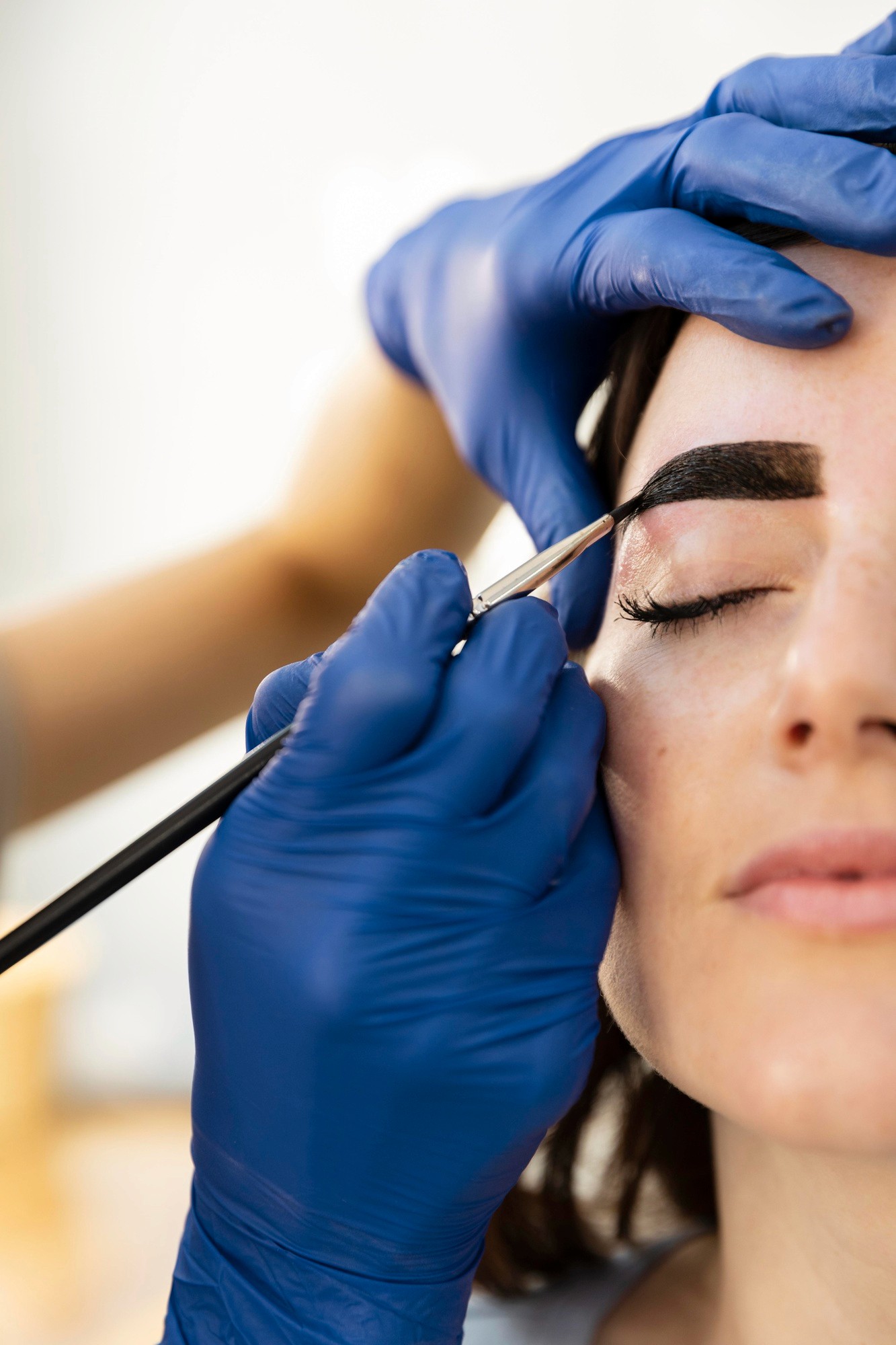
Eyebrow tinting is a fundamental part of professional brow styling. Yet, many notice that the shade appears differently on the skin than on the hairs — sometimes darker, lighter, or with a slightly different undertone. At MONLIS School Munich, future brow artists learn why these differences occur and how to control them to achieve natural, balanced, and long-lasting results.
Different Structures – Different Color Perception
The skin and eyebrow hairs have completely different structures:
The skin is a living surface with pores, lipids, and varying pigmentation. The color only adheres to the outer layer and reacts with the skin’s natural oils.
The hairs are made of keratin, which absorbs pigments differently and reflects light in its own way. As a result, the same tint can appear warmer, cooler, lighter, or more intense on the hair than on the skin.
These structural differences naturally lead to variations in how the color looks once applied.
Factors Influencing the Final Color Result
During professional training at MONLIS School, students study all factors that influence how tint behaves:
Skin type and oil balance – On dry skin, the color appears darker and lasts longer. On oily skin, it fades more quickly.
Hair structure – Thick, dense hairs absorb more pigment and appear deeper in tone, while fine or porous hairs reflect more light and seem lighter.
Temperature and processing time – The warmer the skin or the longer the tint sits, the more intense the color becomes.
Skin preparation – Creams, oils, or makeup residues can block pigment absorption and cause uneven results.
Professionals evaluate all these aspects before tinting to tailor the shade for each client individually.
Chemical Reactions and Pigment Behavior
Eyebrow dyes react differently on skin and hair because they interact with different substances. On the skin, pigments react with natural oils and melanin; on the hair, they bind with keratin.
Therefore, tones can shift slightly:
Ashy pigments may appear more greenish on the skin but neutral brown on the hairs.
Warm tones with red pigments can look stronger on the skin but softer on the hairs.
At MONLIS School Munich, students learn how to balance pigment formulas and adjust undertones for even results — regardless of skin tone or hair color.
Professional Shade Selection and Mixing Techniques
Achieving the perfect brow color requires more than simply choosing the right shade — it’s about balancing reflection between skin and hair.
Instructors at MONLIS School teach how to:
Identify the skin undertone (warm, neutral, or cool),
Balance contrast between hair and complexion,
Mix pigments for smooth, natural transitions.
This ensures that the final color looks harmonious on both skin and hairs — with no harsh lines or mismatched tones.
Common Mistakes and How to Avoid Them
A common beginner mistake is choosing a shade that suits the hair but clashes with the client’s skin tone. This leads to an unnatural or uneven look.
Other key rules include:
Never apply tint to oily or uncleaned skin.
Always monitor the processing time carefully.
Clean the area gently afterward to remove excess pigment without dulling the result.
At MONLIS School Munich, students are trained to recognize and prevent these errors, mastering the control of pigment behavior through precision and technique.
Skin Tinting as a Design Element
In modern brow architecture, a light tint on the skin is not seen as a flaw but as a design technique. It helps fill in sparse areas and define the shape more clearly. The key is keeping the effect soft and natural.
The educators at MONLIS School teach methods for achieving this balance — with controlled pigment placement, even blending, and appropriate product use.
The color difference between skin and hair during eyebrow tinting is completely natural — it results from variations in structure, pigment absorption, and light reflection.
At MONLIS School Munich, students learn not only to understand these effects but also to use them creatively and professionally. The result: beautifully defined, natural-looking brows tailored perfectly to each face.
Want to master professional eyebrow tinting and color theory?
Join MONLIS School Munich and learn how to analyze, mix, and apply pigments for perfectly balanced and long-lasting brow results that enhance every client’s unique beauty.
Eyebrow tinting is a fundamental part of professional brow styling. Yet, many notice that the shade appears differently on the skin than on the hairs — sometimes darker, lighter, or with a slightly different undertone. At MONLIS School Munich, future brow artists learn why these differences occur and how to control them to achieve natural, balanced, and long-lasting results.
Different Structures – Different Color Perception
The skin and eyebrow hairs have completely different structures:
The skin is a living surface with pores, lipids, and varying pigmentation. The color only adheres to the outer layer and reacts with the skin’s natural oils.
The hairs are made of keratin, which absorbs pigments differently and reflects light in its own way. As a result, the same tint can appear warmer, cooler, lighter, or more intense on the hair than on the skin.
These structural differences naturally lead to variations in how the color looks once applied.
Factors Influencing the Final Color Result
During professional training at MONLIS School, students study all factors that influence how tint behaves:
Skin type and oil balance – On dry skin, the color appears darker and lasts longer. On oily skin, it fades more quickly.
Hair structure – Thick, dense hairs absorb more pigment and appear deeper in tone, while fine or porous hairs reflect more light and seem lighter.
Temperature and processing time – The warmer the skin or the longer the tint sits, the more intense the color becomes.
Skin preparation – Creams, oils, or makeup residues can block pigment absorption and cause uneven results.
Professionals evaluate all these aspects before tinting to tailor the shade for each client individually.
Chemical Reactions and Pigment Behavior
Eyebrow dyes react differently on skin and hair because they interact with different substances. On the skin, pigments react with natural oils and melanin; on the hair, they bind with keratin.
Therefore, tones can shift slightly:
Ashy pigments may appear more greenish on the skin but neutral brown on the hairs.
Warm tones with red pigments can look stronger on the skin but softer on the hairs.
At MONLIS School Munich, students learn how to balance pigment formulas and adjust undertones for even results — regardless of skin tone or hair color.
Professional Shade Selection and Mixing Techniques
Achieving the perfect brow color requires more than simply choosing the right shade — it’s about balancing reflection between skin and hair.
Instructors at MONLIS School teach how to:
Identify the skin undertone (warm, neutral, or cool),
Balance contrast between hair and complexion,
Mix pigments for smooth, natural transitions.
This ensures that the final color looks harmonious on both skin and hairs — with no harsh lines or mismatched tones.
Common Mistakes and How to Avoid Them
A common beginner mistake is choosing a shade that suits the hair but clashes with the client’s skin tone. This leads to an unnatural or uneven look.
Other key rules include:
Never apply tint to oily or uncleaned skin.
Always monitor the processing time carefully.
Clean the area gently afterward to remove excess pigment without dulling the result.
At MONLIS School Munich, students are trained to recognize and prevent these errors, mastering the control of pigment behavior through precision and technique.
Skin Tinting as a Design Element
In modern brow architecture, a light tint on the skin is not seen as a flaw but as a design technique. It helps fill in sparse areas and define the shape more clearly. The key is keeping the effect soft and natural.
The educators at MONLIS School teach methods for achieving this balance — with controlled pigment placement, even blending, and appropriate product use.
The color difference between skin and hair during eyebrow tinting is completely natural — it results from variations in structure, pigment absorption, and light reflection.
At MONLIS School Munich, students learn not only to understand these effects but also to use them creatively and professionally. The result: beautifully defined, natural-looking brows tailored perfectly to each face.
Want to master professional eyebrow tinting and color theory?
Join MONLIS School Munich and learn how to analyze, mix, and apply pigments for perfectly balanced and long-lasting brow results that enhance every client’s unique beauty.
Eyebrow tinting is a fundamental part of professional brow styling. Yet, many notice that the shade appears differently on the skin than on the hairs — sometimes darker, lighter, or with a slightly different undertone. At MONLIS School Munich, future brow artists learn why these differences occur and how to control them to achieve natural, balanced, and long-lasting results.
Different Structures – Different Color Perception
The skin and eyebrow hairs have completely different structures:
The skin is a living surface with pores, lipids, and varying pigmentation. The color only adheres to the outer layer and reacts with the skin’s natural oils.
The hairs are made of keratin, which absorbs pigments differently and reflects light in its own way. As a result, the same tint can appear warmer, cooler, lighter, or more intense on the hair than on the skin.
These structural differences naturally lead to variations in how the color looks once applied.
Factors Influencing the Final Color Result
During professional training at MONLIS School, students study all factors that influence how tint behaves:
Skin type and oil balance – On dry skin, the color appears darker and lasts longer. On oily skin, it fades more quickly.
Hair structure – Thick, dense hairs absorb more pigment and appear deeper in tone, while fine or porous hairs reflect more light and seem lighter.
Temperature and processing time – The warmer the skin or the longer the tint sits, the more intense the color becomes.
Skin preparation – Creams, oils, or makeup residues can block pigment absorption and cause uneven results.
Professionals evaluate all these aspects before tinting to tailor the shade for each client individually.
Chemical Reactions and Pigment Behavior
Eyebrow dyes react differently on skin and hair because they interact with different substances. On the skin, pigments react with natural oils and melanin; on the hair, they bind with keratin.
Therefore, tones can shift slightly:
Ashy pigments may appear more greenish on the skin but neutral brown on the hairs.
Warm tones with red pigments can look stronger on the skin but softer on the hairs.
At MONLIS School Munich, students learn how to balance pigment formulas and adjust undertones for even results — regardless of skin tone or hair color.
Professional Shade Selection and Mixing Techniques
Achieving the perfect brow color requires more than simply choosing the right shade — it’s about balancing reflection between skin and hair.
Instructors at MONLIS School teach how to:
Identify the skin undertone (warm, neutral, or cool),
Balance contrast between hair and complexion,
Mix pigments for smooth, natural transitions.
This ensures that the final color looks harmonious on both skin and hairs — with no harsh lines or mismatched tones.
Common Mistakes and How to Avoid Them
A common beginner mistake is choosing a shade that suits the hair but clashes with the client’s skin tone. This leads to an unnatural or uneven look.
Other key rules include:
Never apply tint to oily or uncleaned skin.
Always monitor the processing time carefully.
Clean the area gently afterward to remove excess pigment without dulling the result.
At MONLIS School Munich, students are trained to recognize and prevent these errors, mastering the control of pigment behavior through precision and technique.
Skin Tinting as a Design Element
In modern brow architecture, a light tint on the skin is not seen as a flaw but as a design technique. It helps fill in sparse areas and define the shape more clearly. The key is keeping the effect soft and natural.
The educators at MONLIS School teach methods for achieving this balance — with controlled pigment placement, even blending, and appropriate product use.
The color difference between skin and hair during eyebrow tinting is completely natural — it results from variations in structure, pigment absorption, and light reflection.
At MONLIS School Munich, students learn not only to understand these effects but also to use them creatively and professionally. The result: beautifully defined, natural-looking brows tailored perfectly to each face.
Want to master professional eyebrow tinting and color theory?
Join MONLIS School Munich and learn how to analyze, mix, and apply pigments for perfectly balanced and long-lasting brow results that enhance every client’s unique beauty.
Eyebrow tinting is a fundamental part of professional brow styling. Yet, many notice that the shade appears differently on the skin than on the hairs — sometimes darker, lighter, or with a slightly different undertone. At MONLIS School Munich, future brow artists learn why these differences occur and how to control them to achieve natural, balanced, and long-lasting results.
Different Structures – Different Color Perception
The skin and eyebrow hairs have completely different structures:
The skin is a living surface with pores, lipids, and varying pigmentation. The color only adheres to the outer layer and reacts with the skin’s natural oils.
The hairs are made of keratin, which absorbs pigments differently and reflects light in its own way. As a result, the same tint can appear warmer, cooler, lighter, or more intense on the hair than on the skin.
These structural differences naturally lead to variations in how the color looks once applied.
Factors Influencing the Final Color Result
During professional training at MONLIS School, students study all factors that influence how tint behaves:
Skin type and oil balance – On dry skin, the color appears darker and lasts longer. On oily skin, it fades more quickly.
Hair structure – Thick, dense hairs absorb more pigment and appear deeper in tone, while fine or porous hairs reflect more light and seem lighter.
Temperature and processing time – The warmer the skin or the longer the tint sits, the more intense the color becomes.
Skin preparation – Creams, oils, or makeup residues can block pigment absorption and cause uneven results.
Professionals evaluate all these aspects before tinting to tailor the shade for each client individually.
Chemical Reactions and Pigment Behavior
Eyebrow dyes react differently on skin and hair because they interact with different substances. On the skin, pigments react with natural oils and melanin; on the hair, they bind with keratin.
Therefore, tones can shift slightly:
Ashy pigments may appear more greenish on the skin but neutral brown on the hairs.
Warm tones with red pigments can look stronger on the skin but softer on the hairs.
At MONLIS School Munich, students learn how to balance pigment formulas and adjust undertones for even results — regardless of skin tone or hair color.
Professional Shade Selection and Mixing Techniques
Achieving the perfect brow color requires more than simply choosing the right shade — it’s about balancing reflection between skin and hair.
Instructors at MONLIS School teach how to:
Identify the skin undertone (warm, neutral, or cool),
Balance contrast between hair and complexion,
Mix pigments for smooth, natural transitions.
This ensures that the final color looks harmonious on both skin and hairs — with no harsh lines or mismatched tones.
Common Mistakes and How to Avoid Them
A common beginner mistake is choosing a shade that suits the hair but clashes with the client’s skin tone. This leads to an unnatural or uneven look.
Other key rules include:
Never apply tint to oily or uncleaned skin.
Always monitor the processing time carefully.
Clean the area gently afterward to remove excess pigment without dulling the result.
At MONLIS School Munich, students are trained to recognize and prevent these errors, mastering the control of pigment behavior through precision and technique.
Skin Tinting as a Design Element
In modern brow architecture, a light tint on the skin is not seen as a flaw but as a design technique. It helps fill in sparse areas and define the shape more clearly. The key is keeping the effect soft and natural.
The educators at MONLIS School teach methods for achieving this balance — with controlled pigment placement, even blending, and appropriate product use.
The color difference between skin and hair during eyebrow tinting is completely natural — it results from variations in structure, pigment absorption, and light reflection.
At MONLIS School Munich, students learn not only to understand these effects but also to use them creatively and professionally. The result: beautifully defined, natural-looking brows tailored perfectly to each face.
Want to master professional eyebrow tinting and color theory?
Join MONLIS School Munich and learn how to analyze, mix, and apply pigments for perfectly balanced and long-lasting brow results that enhance every client’s unique beauty.
Why does the color of the tint look different on the skin than on the hairs?
What affects the color intensity on the skin?
Is it possible to make the color on the skin and the hairs identical?
Why does the tint sometimes look grayish or greenish on the skin?
How can I avoid stains or uneven color after brow tinting?