Ten minutes of Googling, a dozen technical terms, no clear answer. That’s how the search for a facial treatment in Munich usually starts for most women. Hydrafacial, chemical peel, microneedling, RF lifting – every page promises something different, without explaining what it’s actually for. Studio price lists all look nearly identical: a list of treatment names with numbers next to them, with no indication of which skin type actually benefits from which one.
That’s not a minor detail. Anyone with sensitive or blemish-prone skin who books an intensive peel or an aggressive deep-cleansing anyway risks redness, irritation, or weeks of unsettled skin instead of the relief they hoped for. And a gentle moisturizing treatment on oily, blackhead-prone skin? Barely does anything. It addresses the wrong problem.
This guide flips the usual order around. Skin type first, then the matching treatment, and only after that the real price in Munich – facial treatment Munich prices as they actually stand in the market, with concrete figures from several Munich studios, not the way they appear in a generic price list without context. By the end, you’ll have a clear picture: which skin type suits which treatment, how such a treatment actually runs, what it realistically costs in Munich, and what a sensible next step looks like.
What’s my skin type? Quick self-test
You can roughly gauge your skin type without a studio appointment – just by how your skin feels two to three hours after washing, with no cream on.
If your skin feels tight, shows fine lines, or looks dull and rough, that points to dry skin. With oily or blemish-prone skin, the T-zone (forehead, nose, chin) usually gets shiny shortly after getting up, often along with blackheads or blemishes. If only the T-zone shines while cheeks and eye area stay drier – that’s the classic combination skin, the most common skin type overall. Redness, itching, or burning with new products, weather changes, or stress point to sensitive skin. And if firmness fades over the years, fine lines deepen, or contours soften – then mature skin is the right term, regardless of exact age; that can start at 35 or not until 50.
A self-test never replaces a professional assessment. It only helps you read the following sections more purposefully – combination skin, for instance, often needs a different approach than plain dryness, and anyone torn between two types gets a more precise answer from an in-person skin analysis.
What barely any self-test mentions: your skin type doesn’t stay the same for years. Hormones, season, stress levels, a new skincare routine – all of that visibly shifts your skin. Combination skin in summer can look much drier in winter, and someone prone to blemishes at 25 sometimes reacts completely differently at 35. Anyone who keeps going to the same treatment for years, even though their skin’s needs have long since changed, often misses the effect they expected for exactly that reason.
Facial treatments explained: What do the terms mean?
Five names show up in almost every Munich price list. Here’s the short version, no jargon.
Facial cleansing is the basis of almost every treatment: cleansing, steam, pore extraction, mask. Suitable as an entry point for practically any skin type, usually repeated every four to six weeks. Peeling – usually fruit-acid based – removes dead skin cells and can visibly refine skin texture; for sensitive or irritated skin it needs a lower concentration. Microneedling works with fine needles that create minimal micro-injuries in the top skin layer, stimulating the body’s own collagen production. Mainly used on more mature skin or for acne scars. RF lifting (radiofrequency) heats deeper skin layers to firm connective tissue; the effect builds up over several sessions, not after a single appointment. And Hydrafacial combines deep cleansing, peeling, and serum infusion in one device – increasingly marketed in Munich as an “all-in-one” option, usually in the mid-to-upper price segment.
Often added is lymphatic drainage massage, a gentle technique against swelling that also boosts circulation – ideal as an add-on for tired or stressed skin. LED light therapy is frequently used as a complement, for example to calm the skin after a peel.
None of these terms describe a treatment that “guarantees results” or “eliminates wrinkles.” Serious providers in Munich phrase this more carefully, because the effect depends on skin type, starting condition, and consistency.
And these procedures aren’t mutually exclusive – quite the opposite. A treatment often combines several building blocks in one appointment: cleansing, a mild peel, a finishing massage. Or microneedling followed by a soothing LED application. That’s why the names on a price list often don’t describe a single procedure but an entire treatment package – which also explains why two studios can charge completely different prices for the same label, say “anti-aging treatment.” There simply isn’t the same thing behind it.
How does a facial treatment actually work?
The exact process differs depending on the treatment booked, but usually follows a similar pattern of four to five steps.
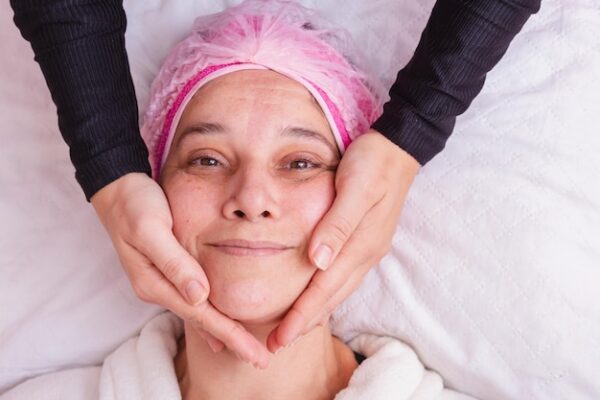
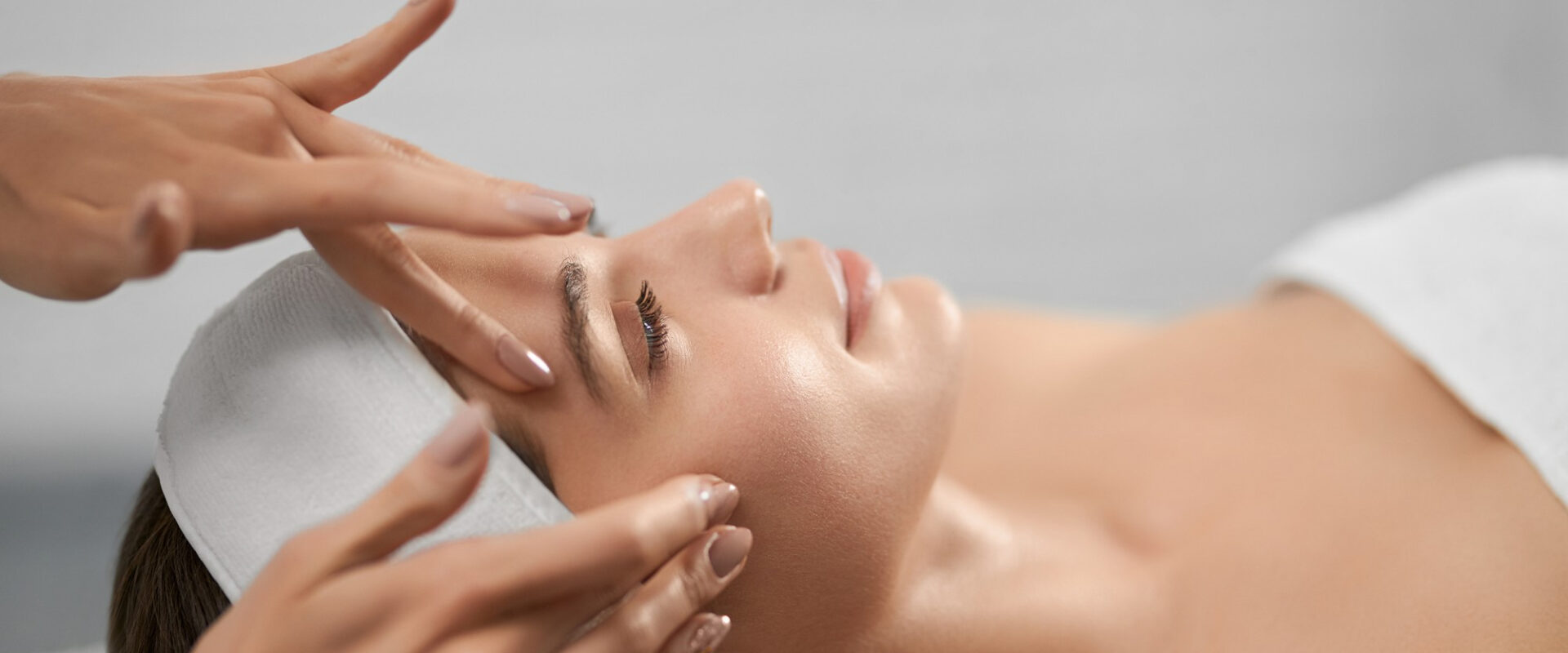
It starts with the skin analysis: a short conversation about skin type, allergies, pre-existing conditions, and the desired result, often supplemented by a visual or device-based assessment of the skin. Next comes cleansing – makeup, sebum, and surface dirt are removed, usually assisted by steam that opens the pores. The third step is the extraction or the chosen main procedure: manual pore extraction, a peel, microneedling, or RF lifting, depending on what’s planned for the skin type. This is usually followed by a calming or nourishing phase – a mask, a massage, or LED light therapy to soothe the skin after the more intense step and replenish moisture. Finally comes aftercare: sunscreen is applied, and the cosmetologist gives advice on what to watch for in the following days – for instance, whether skin might be temporarily more sensitive after microneedling or a peel.
For device-based procedures like RF lifting or microneedling, a somewhat more detailed consultation often precedes the first appointment, since contraindications (such as certain skin conditions or pregnancy) need to be clarified beforehand. For a classic facial cleansing, this lead time is usually shorter.
Which treatment suits which skin type?
This exact matching is missing from most price lists – yet it’s the decisive point before booking.
For oily or blemish-prone skin, deep cleansing takes center stage: a thorough extraction combined with a gentle peel to clear clogged pores without further irritating the skin. Aggressive mechanical peels should be dosed with caution here. Dry skin needs the opposite: intensive moisturizing care, often combined with a gentle massage that works serums and moisture in more deeply. Such a combination treatment can visibly change your skin after just a few sessions – how much depends on your individual starting point.
Combination skin usually benefits from a zone-specific approach: deep cleansing in the T-zone, moisturizing care on the drier areas. A combination that’s rarely offered as a standard package, which is why a brief in-person consultation is worthwhile. For sensitive skin, the basic rule is: mild cleansing instead of aggressive ingredients, no high-percentage peels, no intense mechanical procedures without a prior tolerance test. For mature skin, firming and collagen-stimulating methods move to the forefront – RF lifting or microneedling, usually spaced several weeks apart and delivered as a series of sessions, not a single appointment.
For acne-prone skin, extra caution is worthwhile: a facial treatment can support the skin’s condition, but it doesn’t replace dermatological evaluation for inflammatory or persistent issues.
For orientation, here’s a simplified matching, roughly the same as what emerges from an initial skin analysis in Munich:
| Skin type | Recommended focus | Better to avoid |
|---|---|---|
| Oily / blemish-prone | Deep cleansing, gentle peel | Overly rich oil masks |
| Dry | Intensive moisturizing care, massage | Aggressive peels |
| Combination | Zone-specific combination | One uniform product for the whole face |
| Sensitive | Mild cleansing, soothing masks | High-percentage acids, intense mechanics |
| Mature | RF lifting, microneedling, treatment series | A single appointment without repetition |
This table doesn’t replace individual consultation. But it shows why the same treatment can work completely differently for two people. This exact distinction – by skin type rather than marketing name – is also the basis of the Cosmetology at Goetheplatz, where treatment is only decided after a brief skin analysis.
Discover Cosmetology at Goetheplatz
Facial treatment Munich: What does it really cost? (Price comparison)
In short: the range for a facial treatment in Munich runs from about 85 € to over 250 €, depending on scope, technology, and studio. The difference mainly comes down to treatment duration and the technology used, not arbitrary pricing.
At the lower end are classic cleansing treatments with no device-based technology. Kosmetikstudio Haidhausen, for example, starts its basic treatment at 85 €, while a professional facial treatment in Munich averages between 80 and 120 euros – depending on treatment length, products used, and the cosmetologist’s specialization. Tybas Beauty is similarly positioned with a basic treatment from 94 € for 60 minutes. In the mid-range segment are more intensive cleansing and care treatments with longer application times, usually between 100 € and 150 € – this is also where device-based procedures like microneedling or RF lifting sit for most Munich providers. At the higher end: medically oriented studios. At California Skin, classic facial cleansing starts at 149 €, a Hydrafacial at 169 €, and a microneedling session in the anti-aging range also from 149 €.
(Market prices stated: as of July 2026 – prices may change; confirming on-site beforehand is recommended.)
For orientation, here’s a simplified overview:
| Price segment | Typical treatments | Munich price range |
|---|---|---|
| Basic | Classic cleansing, express care | from approx. 85–100 € |
| Mid-range | Peeling, intensive cleansing, combined care | approx. 100–150 € |
| Premium / device-based | Microneedling, RF lifting, Hydrafacial, packages | approx. 149–260 € |
At MONLIS, a classic facial cleansing (45 minutes) is 100 €, a peel also from 100 €, and device-based treatments like microneedling or RF lifting range between 100 € and 150 €. If you’re unsure which category suits your skin, you can book a cosmetology consultation beforehand – 40 minutes for 60 €, before committing to a larger treatment.
The price gap between 85 € and 250 € has an understandable basis: duration, technology used, and the amount of individual consultation involved.
A lower price doesn’t mean lower quality. A studio in the basic segment can offer an excellent classic cleansing when that’s exactly what’s needed – an expensive device-based procedure would simply be the wrong choice in that case, regardless of price. Conversely, for mature skin seeking visible firming, the cheapest option is rarely worthwhile, since RF lifting or microneedling require a certain device quality and experience.
What price lists almost never mention: single treatments versus packages. Anyone who opts for a series of four to six sessions often pays less per appointment than with single bookings – a model common at most Munich studios for microneedling or RF-lifting series, since the effect builds up over multiple appointments anyway. Before your first booking, it’s worth asking about package prices instead of just comparing the single-session price.
How often should I get a facial treatment?
Every four to six weeks – that’s the most commonly cited rhythm in Munich, including at MONLIS Goetheplatz. The reason lies in the skin’s natural renewal cycle: within this timeframe, new skin cells form while dead cells and residue build up again. For younger skin, this cycle averages around four weeks; with increasing age, it can extend to six to eight weeks. Mature skin therefore often benefits from a somewhat more generous gap between appointments, rather than strictly sticking to a four-week rhythm.
The exact interval still depends on skin type and goal. During acute blemishes or a more intensive anti-aging phase, a shorter rhythm can make sense; for stable, robust skin, a longer gap is sometimes fine too. A fixed schedule can only be seriously set after individual consultation – a blanket promise like “once and you’re done for good” would simply be wrong.
For a series of microneedling sessions, the gap is usually four to six weeks between appointments, so the skin can fully regenerate between treatments. A classic facial cleansing, on the other hand, can be scheduled a bit more often if needed, without overtaxing the skin – provided it’s a mild variant without intensive mechanical extraction. Anyone who regularly gets blemishes during the same season, say in summer due to increased oil production, can adjust the rhythm seasonally instead of keeping the same interval year-round.
Anti-aging treatment Munich: Is it worth it already at 30?
Yes, from a preventive standpoint. Not because visible fine lines are already a problem at 30, but because preventive care often works better than later correction.
From the mid-20s onward, the body’s own collagen production starts to gradually decline. Anyone who starts countering this with peptide or hyaluronic acid care lines plus occasional professional treatments at this stage supports the skin during a phase when it still responds well to stimulation. Classic anti-aging procedures in Munich – RF lifting, microneedling, complemented by corresponding series – can support skin firmness and visually reduce the appearance of fine lines. None of these is a miracle cure: the visible change builds up over a series of sessions, not a single appointment, and the result varies from person to person.
In terms of price, these anti-aging procedures move in the same range described in the price comparison above: RF lifting and microneedling run between 100 € and 150 € per session at most Munich studios, MONLIS included – usually cheaper as a package of four to six appointments than as single bookings.
Anyone starting only at 45 or 50 loses nothing by it. The same procedures work later too, often just needing a somewhat higher frequency or a combination of several approaches. So the starting point is less an age limit than a question of personal priority.
Between 30 and 40, it’s mostly about prevention in practice: a combination of home care with active ingredients like hyaluronic acid or peptides and occasional professional treatments every few months. From the mid-40s onward, a more intensive series often takes priority, for instance several microneedling or RF-lifting sessions spaced four to six weeks apart, combined with an adjusted at-home care routine. Important across all variants: sun protection remains the most effective and cheapest building block of any anti-aging strategy – no studio treatment offsets years of unprotected sun exposure.
Does it have to be a device-based treatment right away? Not necessarily. For early, subtle signs, a combination of regular care and the occasional professional moisturizing treatment is often enough – device-based procedures like RF lifting usually only become relevant once loss of elasticity or deeper lines are already visible.
What should you look for when choosing a cosmetology studio in Munich?
Three points can be checked on-site within a few minutes, even before your first appointment is booked – regardless of which cosmetology studio in Munich you ultimately choose.
First: hygiene. Sterile single-use materials for more invasive procedures like microneedling, visibly clean work surfaces, clear processes between clients. Second: qualifications. Certified cosmetologists with recognized training credentials are far from standard everywhere in Munich – a quick look at the studio’s website or a direct question provides clarity. Third: the consultation itself. A reputable studio takes time for a skin analysis before the first treatment, instead of directly recommending the most expensive option. If a full package is sold immediately without even looking at your skin type, that’s a warning sign.
Transparent pricing matters too – a clear price list without hidden extra costs after the treatment. And one criterion that’s easy to overlook: the language of the consultation. Especially in a city like Munich with a high share of international and multilingual residents, it makes a difference whether the skin analysis takes place in German, English, or your native language – misunderstandings about allergies or pre-existing conditions can be avoided from the start this way.
Other clients’ reviews are also worth a second look – not just the star rating, but the actual comments on consultation quality and how individual skin issues were handled. A studio repeatedly mentioned in independent reviews for thorough consultation rather than quick processing is usually the more reliable choice, regardless of price. This exact combination of certified specialists, sterile instruments, multilingual service, and individual consultation is also what MONLIS builds its offer on, visible for example in the Cosmetology at Goetheplatz or in the overview of all MONLIS beauty studios.
See all beauty treatments — including cosmetology, manicure, and more.
Skin type determines which facial treatment in Munich actually makes sense – not the most impressive-sounding name on the price list. Dry skin needs moisture, not aggressive peeling. Blemish-prone skin benefits from deep cleansing rather than intensive anti-aging technology. Mature skin needs time and a series of sessions rather than a one-off appointment, and sensitive skin above all needs restraint in choosing active ingredients.
Price alone says little about it. The range in Munich runs from 85 € to over 250 €, and both ends of that range can be the right choice – depending on what’s actually needed. If you’re unsure where your own skin falls on this grid, the most reliable answer doesn’t come from another blog post, but from a brief in-person skin analysis.
MONLIS offers exactly that step – either at the Cosmetology at Goetheplatz or at the Cosmetology at Karlstraße. For more on skincare and treatments, visit the MONLIS Cosmetology Blog. If you’d rather leave the decision open for now, a MONLIS gift voucher from 20 € makes a risk-free starting point.
This article is for informational purposes only and does not replace advice from a doctor or a qualified cosmetologist.
Frequently Asked Questions
A classic facial cleansing usually takes 60 to 75 minutes, an express treatment about 45 minutes. Anti-aging or specialized treatments with device-based procedures typically take 75 to 90 minutes, including preparation and aftercare. Your first visit to a new studio usually includes a short consultation as well.
A classic facial cleansing removes sebum, dirt, and blackheads from the pores, usually with steam and manual extraction. A peel additionally works with fruit acid or mechanical agents to loosen dead skin cells – it works deeper, but needs an adjusted concentration depending on skin type. Both procedures are often combined in the same appointment.
Yes, but with an adapted method: milder cleansing steps, lower-dose peels, and no aggressive mechanical procedures without a prior tolerance test. For acne-prone skin, the focus is usually on gentle, anti-inflammatory care. For persistent or inflammatory skin issues, a cosmetic treatment does not replace dermatological evaluation.
Prices range from around 85 € for simple basic treatments to over 250 € for premium device-based procedures. Most Munich offers fall between 100 € and 150 €, depending on duration, technology, and how much individual consultation is included.
Preventive approaches can make sense as early as the mid-20s to early 30s, once natural collagen production starts to gradually slow down. Starting later – at 40, 45, or beyond – works just as well, often with an adjusted frequency or a combination of several procedures like microneedling and RF lifting.