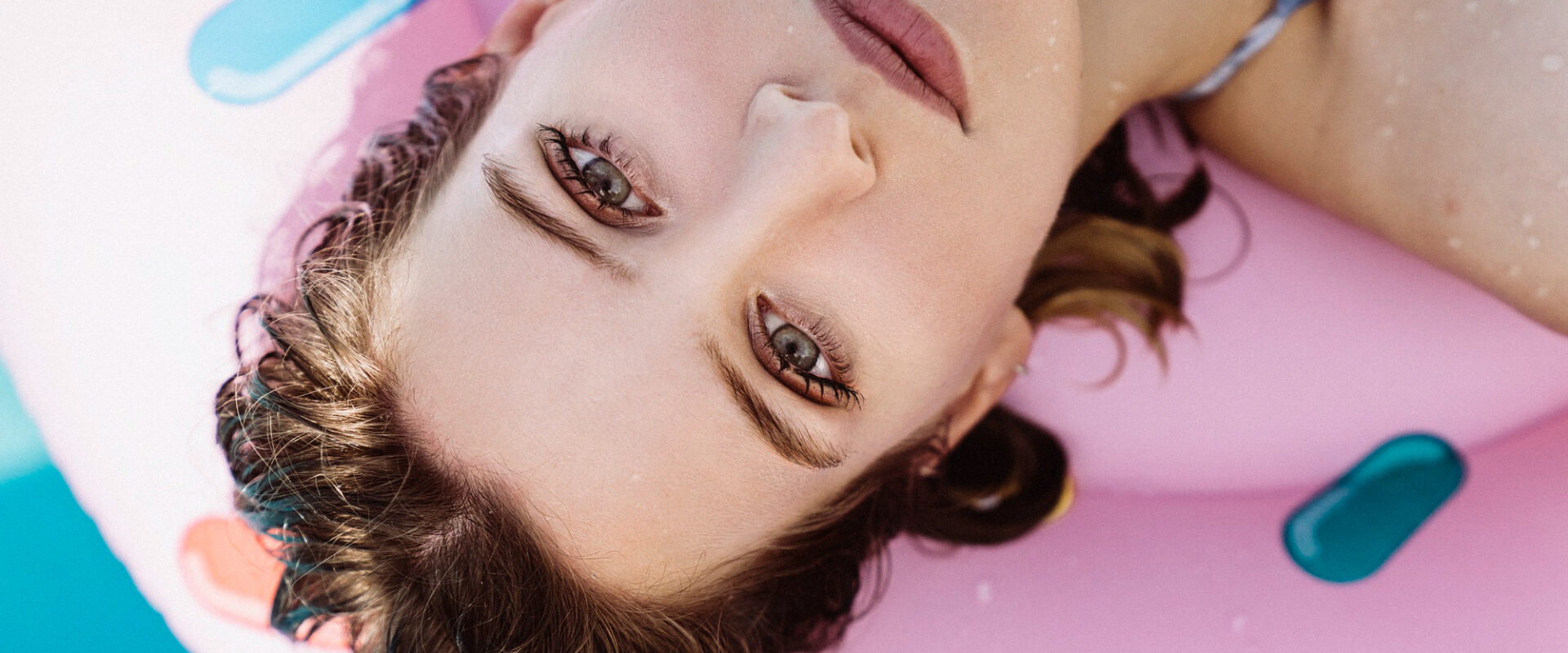
35 degrees, Feldmochinger See is calling, and while drying off from the lake the same thought always comes up: can lash extensions actually handle swimming? The good news is that the answer is refreshingly simple. It’s just not quite as simple as some summer guides promise. Lash extensions hold up well against pool chlorine, the Isar and salt water, as long as you know what to do in the hours afterwards. This guide covers where pools, lakes and the Isar really differ, which care routine has proven itself for swimming in summer, and when an unscheduled refill appointment makes sense — including the mistakes even seasoned lash fans keep making.
Chlorine and adhesive: what actually happens when you swim
Chlorine is an oxidising agent. It is added to pool water to kill bacteria and algae, and that same chemical aggressiveness also affects the cyanoacrylate adhesive used to bond individual lashes to your natural lashes. The effect isn’t an explosion — it’s a gradual process: with every contact, the bond becomes a little more brittle until individual extensions start falling out early. A single swim changes very little. But anyone who jumps into a chlorinated pool several times a week without aftercare will notice the effect on lash density, usually within two or three weeks.
For context: commercial lash extension adhesives are made of cyanoacrylate, the same chemical backbone as super glue. This bond is sensitive to moisture in general, but especially to oxidising substances like free chlorine. Chlorine attacks the polymer chains on the surface of the bond and makes it brittle over time — comparable to a rubber band that gradually loses elasticity from UV light. During a single hour in the pool, this effect stays microscopically small. Over a week of daily laps, it adds up.
One point that often gets overlooked during consultations: the adhesive needs 24 to 48 hours after the appointment to fully cure (the exact time depends on the adhesive type). During this window, the bond is especially sensitive to moisture — not just chlorine, but also steam, sweat and ordinary shower water. Anyone who heads to the pool right after their appointment isn’t mainly risking long-term chlorine damage — they’re risking the adhesive never bonding properly in the first place.
Pool, lake or the Isar — is there a difference?
Yes, and a clear one: chlorinated pool water is chemically more aggressive toward the adhesive than natural fresh water, while lakes and the Isar bring their own challenges instead — sand, suspended particles and mechanical friction.
Feldmochinger See: in the north of Munich, part of the so-called Dreiseenplatte, it’s the city’s largest gravel-pit lake — roughly 16 hectares, up to six metres deep in places. Three natural freshwater springs keep the water constantly refreshed; the city of Munich tests bathing water quality regularly throughout the season, and it currently rates as “excellent.” For lashes, that means no chlorine, but fine lake sand and algae residue that can settle in the lash line if you don’t rinse it off. Anyone spending a full day at the south-western naturist area or on the wide sunbathing lawns usually swims more than once — reason enough to repeat the cleaning routine several times rather than waiting until evening.
The Flaucher on the Isar is a different story, and a considerably wilder one. Within the city, the Isar isn’t an official EU bathing water — it’s a wild river with noticeable current. Water temperature in midsummer is usually between 15 and 20 degrees, though it can go well above that on especially hot days. For lashes, the chemistry of the water matters less than the mechanics: swimming against the current with your eyes open, or rubbing your eyes because gravel or fine silt is irritating them, creates the kind of friction that loosens extensions early — regardless of whether chlorine is involved at all. Swimming is officially banned right at the Flaucher footbridge; it’s permitted, among other places, between the Großhesseloher Brücke and the Braunauer Eisenbahnbrücke.
Salt water is where things get murky. Part of the lash industry warns that salt attacks the adhesive similarly to chlorine and additionally dries out the skin around the lash line, since it draws out moisture. Other sources claim the opposite: that salt actually helps preserve the extensions and protects against drying out, as long as you rinse thoroughly afterwards. Both positions appear in the international lash literature, and neither has clearly won out. Honest restraint is the right approach here, rather than selling either version as settled fact. For Munich, the question is more of a holiday concern than a daily one anyway, since there’s no real sea water locally.
The care routine before swimming
The most important rule is already mentioned above: keep lashes dry for 24 to 48 hours after your appointment. That also applies to steam — hot water showers aimed directly at your face — and to sweat during exercise. After that, a short routine applies that you can repeat all season:
- Wear swimming goggles if you’re doing active laps or diving. They noticeably reduce direct water contact with your lashes and protect your eyes from chlorine irritation at the same time.
- Avoid oil-based creams around the eye area, including sunscreen: oil is the real opponent of cyanoacrylate adhesive, not just water. Water-based, oil-free formulations (“oil-free” or “non-comedogenic”) are now available at most drugstores.
- Don’t rub hastily with your beach towel if sand is stinging your eyes. Rinse briefly with clear water first, then dab gently afterwards.
- Mention an upcoming weekend at the lake at your appointment: some studios apply an extra sealant that makes fresh bonds more resistant faster — whether that makes sense in your case is best discussed in person with your lash artist.
One note for anyone new to lash extensions: the first few days after your initial treatment are generally more sensitive than later refill appointments, simply because you haven’t built up a routine with the extensions yet. For your first summer swim of the season, it’s worth planning a bit more buffer time than you would for a refill you’ve been through several times already.
The care routine after swimming — the part that actually matters
Everything before swimming is preparation. What really saves your lashes over the summer happens afterwards. Four steps are enough:
- Rinse your lashes with clear, lukewarm tap water right after swimming: this removes most of the chlorine, salt or lake sand before it dries and sets in.
- Gently pat dry with a lint-free cloth, never rub: friction is the second big enemy of the bond, alongside oil, and wet lashes are additionally more vulnerable to mechanical stress than dry ones.
- In the evening, do a more thorough clean with an oil-free lash shampoo or foam that dissolves residue from sunscreen, make-up and water without attacking the adhesive. What matters isn’t the brand, but the oil- and alcohol-free formula.
- Finish by combing through your lashes with a clean spoolie so they don’t stick together and keep their shape.
If you’re regularly active in summer — not just swimming, but running or using the sauna too — you’ll find a more detailed care plan in our article Lash Extensions and Sport: Care for an Active Summer.
How long do lashes really last in summer — and when is a refill worth it?
Under normal conditions, the refill cycle for lash extensions is between two and four weeks. If you swim often in summer, many lash studios recommend planning toward the shorter end of that range rather than waiting until week four. This rhythm also follows the natural growth cycle of your own lashes: every lash falls out after four to eight weeks anyway and is replaced by a new one, independent of any extension.
How do you know it’s time for an unscheduled appointment? Typical signs are gaps at the outer corners of the eyes, individual extensions sitting crooked or isolated, or an overall “thinned out” look that shows up after a week and a half instead of after three. That’s never a sign that something was done wrong — it’s simply the physics of chlorine, sun care and salt water working faster in summer than during the rest of the year, combined with the natural lash cycle that continues regardless of season.
Refills for MONLIS lash extensions in Munich can be booked at short notice — directly at the Goetheplatz location or at Karlstraße.
Common summer mistakes with lash extensions
A handful of habits reliably cause early lash loss, often without people realising the connection right away.
- Self-tanner and sunscreen are often applied too close to the lash line: both usually contain oils that settle into the adhesive over hours and slowly dissolve it. Using a mineral, oil-free sunscreen made specifically for the eye area avoids this problem almost entirely.
- Falling face-first into a pillow after a beach day without brushing your lashes first pushes individual extensions in one direction for hours, making them hard to loosen again without breaking — usually harmless on natural lashes, considerably riskier with a fixed extension bond.
- Rubbing your eyes with wet hands, for example after surfacing in a lake or from sudden itching caused by sunscreen in the eyes, creates a localised pulling force on individual lashes, often without you even noticing in the moment.
- Mascara on extensions, even when marketed as “waterproof”: waterproof formulas generally don’t come off with clear water — they need oil-based remover or mechanical rubbing, and both damage the adhesive more than the mascara itself ever could. A tinted lash lift is the lower-maintenance summer alternative to mascara.
None of these four mistakes causes total lash loss on its own. But together, they reliably explain why some clients end up with noticeably less volume by August, despite coming in regularly for refills and feeling like they’ve been “pretty careful.”
Lash extensions and a summer full of lakes, the Isar and pools are not mutually exclusive. The combination just needs one short care moment after every swim: rinse, pat dry, clean in the evening, comb through. Make that routine a habit, plan your refill closer to the two-week mark if you swim often, and you’ll get through the season well — whether your next trip is to Feldmochinger See, the Isar, or the local outdoor pool.
If you notice visible gaps or an overall thinner lash line, it’s worth stopping by the studio rather than trying to fix it yourself or waiting for your regular appointment. Especially in summer, that’s not a sign of carelessness — it’s simply the sum of chlorine, sun, salt and completely normal mechanical wear.
→ Book your lash extension appointment in Munich now
This article is for general information purposes only and does not replace individual advice from a trained professional or — in the case of skin or eye irritation — from a doctor.
Frequently Asked Questions
No — keep your lashes dry for the first 24 to 48 hours so the adhesive can fully cure. After that, swimming is no problem as long as you follow the care steps above.
Chlorine acts as an oxidising agent and weakens the bond over time, but not immediately from a single swim. What matters is how often it happens combined with a lack of aftercare.
Sources disagree here: some consider salt water similarly harsh as chlorine, others credit it with a slightly preserving effect. There’s no clear scientific answer yet — when in doubt, the same aftercare as after a pool applies.
Rinse first with clear, lukewarm water, pat dry with a lint-free cloth, then clean in the evening with an oil-free lash shampoo. Finish by combing through with a clean spoolie.
The regular cycle is two to four weeks; if you swim several times a week, plan closer to the two-week mark to fill in gaps early.