Open-toe shoes, the first truly warm day of the year — and suddenly you realise your feet haven’t quite left winter behind. Cracked heels, dry cuticles, remnants of last autumn’s polish. Sound familiar? The good news: one professional summer pedicure appointment in Munich is all it takes to fix that — and far more thoroughly than any home kit ever could.
In this article you’ll find: the nail design trends of 2025, a step-by-step professional foot prep guide for the beach season, a realistic summer care plan — and what to look for when choosing a studio.
Pedicure Trends 2025 – What’s in This Summer?
Less drama, more skin. Summer 2025 is all about shades that enhance your natural skin tone — with carefully chosen accents for those who want more expression.
Nude is not just nude anymore. The new generation features milky undertones, creamy surfaces and a shine that looks almost like a second skin.
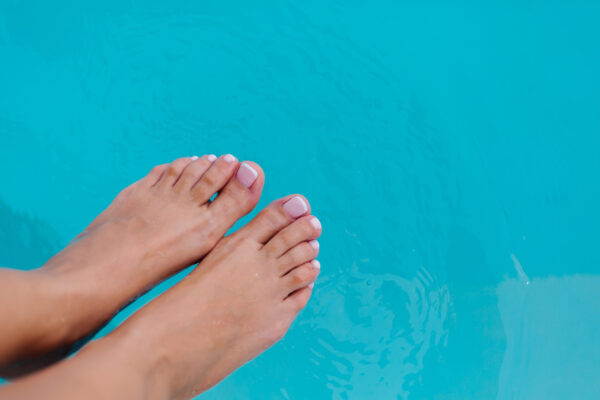
Clean Pedicure — the dominant movement of the season. Delicate rose-nude tones with a milky undertone, high-gloss finish, no decoration. The effect is subtle yet clearly visible: feet look more polished than they perhaps are. This look works with everything — sandals, mules, open-toe styles.
Glazed Donut — if you know the effect Hailey Bieber made famous on hands, you already know what’s heading to the toes. A pearlescent, nearly transparent gloss creates a 3D shimmer. Works on almost every skin tone — because there’s no dominant colour.
French Pedicure 2.0 — the classic is back, but in a different form. The base can now be peach, milky white or even metallic; the tips are neon, gold or graphic. If you ever found the classic French too conservative, this version is for you.
Butter Yellow and Pastels — soft sunshine yellow and light sage green are the summer colours of the year. Not loud, not pale — right in between.
Digital Lavender — this cool lavender-pink has moved from hands to feet and remains relevant throughout summer 2025. Especially striking paired with white sandals.
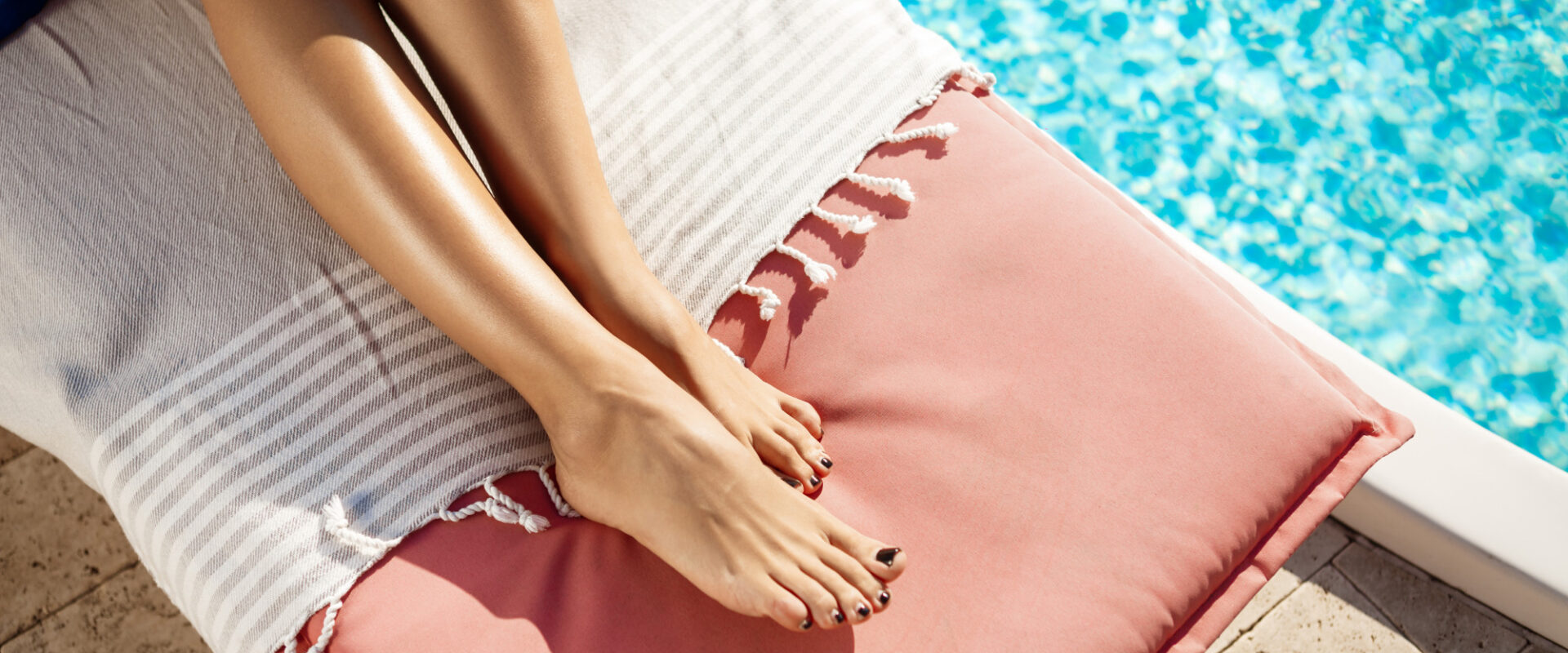
Gothic Accents — deep aubergine, dark green and matte black remain a statement. Not for everyone — but those who wear it, wear it with conviction.
Clean Pedicure, Glazed Donut & Co. – The 5 Hottest Designs in Detail
If you’re looking to achieve these trends with CND Shellac or gel, longevity should be your priority — it makes all the difference with these shades.
1. Clean Pedicure
The look is deliberately understated. Nude tones with a pink or milky-white undertone, high-gloss topcoat — no prints, no glitter. Nails look fresh and groomed without being loud. Whether you’re at the office during the day or relaxing by Lake Starnberg in the evening, this look always fits. Applied as Shellac or gel, Clean Pedicure lasts three to four weeks — even at the beach.
2. Glazed Donut
Pearl shimmer on a neutral base. Light catches in the nails — subtle but visible. Equally at home with a casual white sneaker look or evening sandals. Applied as Shellac over a very sheer base.
3. French Pedicure 2.0
The difference is in the details: the base is no longer automatically white-transparent. Peach, caramel or a soft metallic as the foundation changes the whole impression. Tips can be thin & neon or thick & nude — depending on the expression you’re after.
4. Butter Yellow and Sage Green
Soft yellow looks especially warm on fair and medium skin tones, while sage green complements tanned skin beautifully. Both shades are calibrated to work with sandals in beige, white or black — without overpowering.
5. Gothic Contrast
For those who treat colour as a statement: deep aubergine or matte black. This trend sets a deliberate counterpoint to the pastel wave — and that’s precisely its strength. It’s not for everyone, but those who choose it look considered and stylish.
Getting Feet Summer-Ready – The Professional Prep Step by Step
A professional pedicure is more than just polish. Whether it’s your first time or you’re returning after a long break, you’ll notice the difference immediately — in the quality of the result and in how long it lasts. Here’s how a complete summer pedicure unfolds:
- Soaking — Feet are soaked in warm water for 10–15 minutes. This softens calluses and cuticles, making all subsequent steps easier.
- Callus removal — Professional instruments remove excess callus from heels and balls of the feet — not with disposable razors or shavers that can cause micro-tears, but with properly sterilised tools.
- Nail shaping — Nails are filed into the desired shape. Straight with slightly rounded corners is the most common choice — it helps prevent ingrown nails.
- Cuticle care — Cuticles are pushed back and excess skin removed. This is essential for an evenly applied polish.
- Massage and moisture — A foot or lower-leg massage with nourishing cream rounds off the treatment before polish is applied.
- Colour and topcoat — Two to three coats of polish — cured under a UV/LED lamp for gel or Shellac — create the foundation for a result that lasts for weeks.
The key difference between professional and home application isn’t the colour — it’s the preparation. Professional tools, correct sterilisation and the expertise to know how far callus removal can go without causing irritation: these simply cannot be replicated at home.
How Often Should You Get a Pedicure in Summer? A Care Plan for the Beach Season
The answer depends primarily on which type of pedicure you choose — not on a rigid rule.
Classic pedicure with regular polish: every two to three weeks. Regular nail polish lasts longer on toes than on fingers, but grows out with the nail. In summer, with lots of movement, sandals and water, lean toward two weeks.
Gel or Shellac pedicure: every three to four weeks. Longevity is significantly higher because the polish is cured and not attacked by solvents. Saltwater and chlorine generally have little effect on the result — as long as preparation was done correctly.
Is gel pedicure worth it for holiday? Yes — especially if your trip is longer than ten days, or involves a lot of water, sand and heat. Shellac and gel hold up far better in these conditions than regular polish.
What helps between appointments at home:
- Daily foot cream — especially on heels and balls of the feet
- Cuticle oil two to three times a week
- No nail scissors if gel or Shellac is applied — filing is gentler
- Don’t forget SPF on your feet when wearing sandals
- Book your first appointment at least seven to ten days before your holiday — so everything sets properly and you’re not travelling with fresh polish
What Does a Pedicure Cost in Munich? Price Guide & What’s Included
Munich has a wide price range — depending on the studio, location and scope of service. Here’s what you can expect:
| Service | Price range Munich | Typically included |
|---|---|---|
| Classic pedicure | from €30–50 | Soaking, callus treatment, nail shaping, cuticle care, base coat |
| Gel or Shellac pedicure | from €45–70 | Full preparation + UV/LED-cured polish |
| Pedicure with nail design | from €40–80 and above | Depends on complexity of the design |
What affects the price:
- Premium products (OPI, CND Shellac, Luxio rather than unbranded polish)
- Certification and experience of the technician
- Add-ons such as foot massage or paraffin dip
- Studio location — central districts tend to be more expensive
A lower price isn’t automatically a quality judgement — but it can be a signal of compromised hygiene or inferior materials. When it comes to a pedicure appointment, hygiene is not a nice-to-have. It’s a requirement.
What to Look for When Choosing a Pedicure Studio in Munich
The most common concern before a pedicure appointment isn’t the price. It’s: is this studio genuinely clean? A fair question. Poor hygiene practice in pedicures can lead to nail fungus, infections or skin irritation. It’s worth checking carefully before booking.
- Instrument sterilisation — Everything that comes into contact with skin must either be sterilised between clients or used once only. Ask. Reputable studios answer openly.
- Certified technicians — Trained beauticians or podiatrists know the limits of their work — and when a medical professional should be consulted.
- Premium products — OPI, CND Shellac and similar brands are popular not just for results, but because they’re tested for known harmful substances.
- Online booking — If you like to plan spontaneously or in the evening, you need a studio that’s bookable 24/7 — not just by phone during opening hours.
- Multilingual service — In Munich — with a growing international and Ukrainian community — this isn’t a luxury, it’s a convenience.
MONLIS Beauty Studio meets all these criteria at three central locations: Goetheplatz, Westpark and Karlstraße. Technicians work with OPI and CND Shellac, hold professional certifications and speak German, English, Ukrainian and Russian. Online booking available around the clock.
Ready to book your summer pedicure at MONLIS Studio? Available online, 24/7, at three central Munich locations: Goetheplatz, Westpark and Karlstraße.
This article is for informational purposes only and does not replace advice from a qualified medical professional or podiatrist.
Frequently Asked Questions
Three to four weeks, sometimes longer. Gel is cured under UV or LED light, making it significantly more durable than regular nail polish. Saltwater, chlorine and sandals generally have little effect — as long as the cuticle, surface and primer were prepared correctly.
With a gel or Shellac pedicure: yes, immediately. The material cures under the lamp and is completely dry by the time you leave the studio. With regular polish, most studios recommend waiting at least 30 to 45 minutes.
Shellac is a specialist hybrid formula (developed by CND) that sits between regular nail polish and gel: thin, flexible and easy to remove. Gel is slightly thicker and longer-lasting, and can also be used for nail extensions. For pedicures, Shellac is usually the more comfortable choice — thinner application, more natural finish.
Daily foot cream (especially on heels and balls of the feet), cuticle oil two to three times a week, and no aggressive filing or cutting when gel or Shellac is applied. A weekly foot soak with a little salt can help keep the skin supple.
Seven to ten days before departure is the standard recommendation. This gives gel time to fully cure, or keeps regular polish fresh enough for travel, and still leaves room for any small adjustments. Travelling in July or August? Studios in Munich fill up quickly in peak season — booking two weeks ahead is safer.