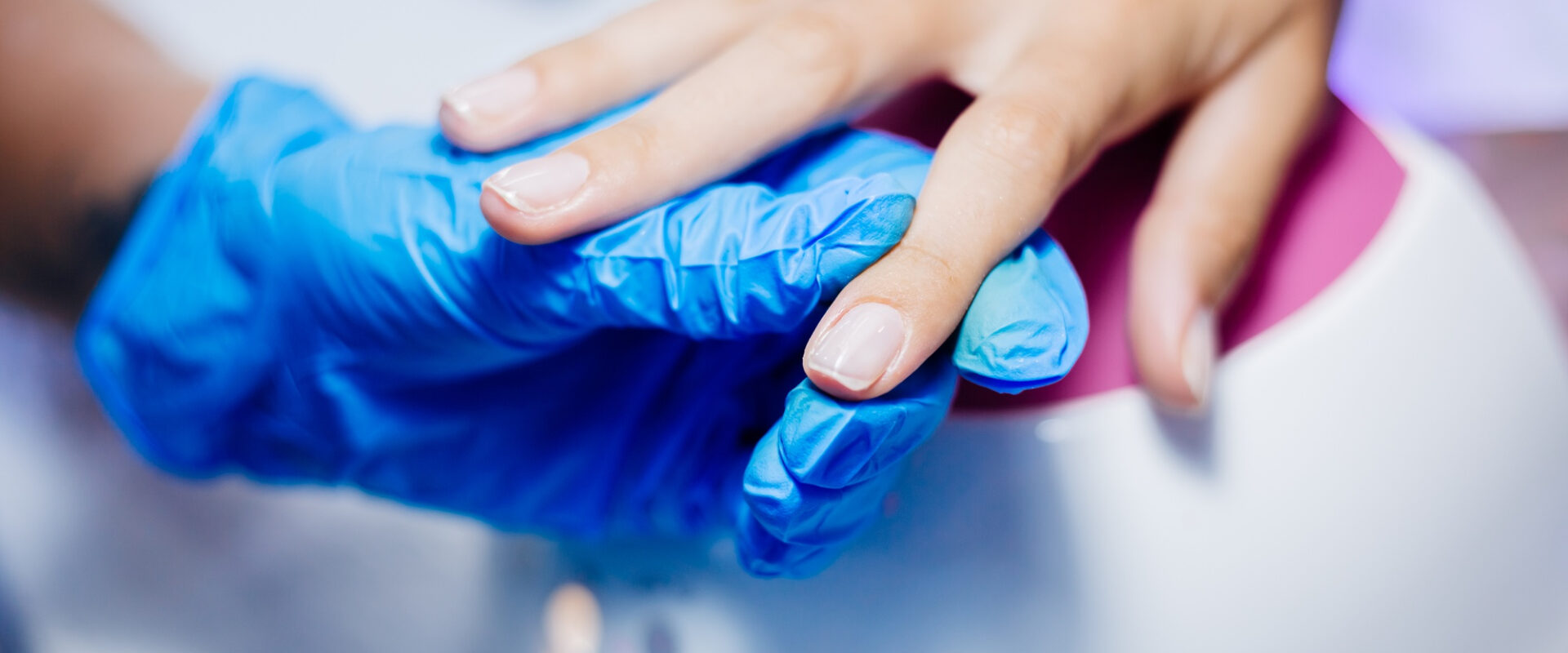
A great manicure starts long before the first coat of polish — it starts with the hygiene happening behind the scenes. Clean instruments, a tidy workstation, and well-trained staff are what let you simply relax during your appointment.
Munich is one of the cities with the highest density of nail salons in Bavaria — from chains to small shops on side streets. Knowing what good hygiene looks like means you can size up a salon within the first few minutes. Here are ten standards that define a truly clean, professional nail salon — and how we put them into practice at our three MONLIS studios in Munich.
Why hygiene makes all the difference at a nail salon
In short: because filing, cuticle care, and drilling all involve close work with your skin — and hygienically sound instruments, paired with careful technique, are exactly what let you feel completely comfortable throughout.
The market is growing noticeably: there are now roughly 65,000 nail salons across Germany, with industry revenue for 2025 expected to reach around €427 million. Interestingly, opening a nail salon doesn’t require completed formal training — usually a short course and a trade registration are enough. All the more reason to choose salons that voluntarily invest in training, certification, and ongoing education rather than settling for the legal minimum.
Legally, nail salons in Bavaria are bound by the generally recognized rules of hygiene set out in the Bavarian Hygiene Ordinance. The Munich Health Department has published a detailed checklist that reputable salons follow as a matter of course — regardless of whether an official inspection is imminent. This checklist forms the basis for the ten standards outlined below.
The good news: most of these standards are easy to spot with a little attention at your very next appointment — from the first glance as you walk in to how openly a salon talks about its procedures.
Standards you can spot within the first minutes
The first two minutes in a salon already reveal a lot — provided you know what to look for.
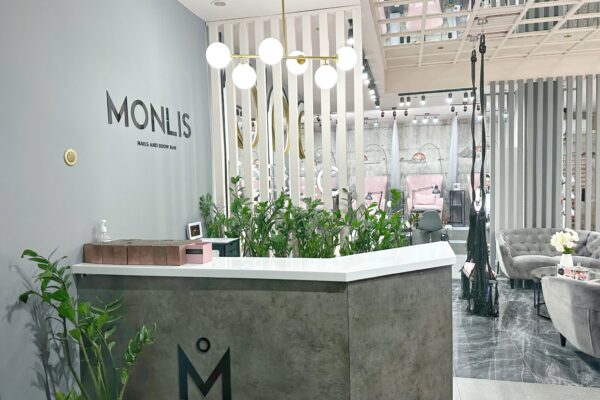
- Standard 1 — clean, well-kept surfaces. Dust-free shelves, clean surfaces, a freshly mopped floor, and a neutral-smelling, well-ventilated room are baseline standards for a professional salon. The team’s appearance matters too: clean workwear, short unpolished fingernails on the nail technicians themselves, and no hand or arm jewelry during treatment.
- Standard 2 — smooth, easy-to-disinfect flooring. Tile, vinyl, or laminate can be thoroughly cleaned and disinfected. Carpet in the treatment area may feel cozy, but it makes daily cleaning much harder — which is why professional salons deliberately choose smooth surfaces.
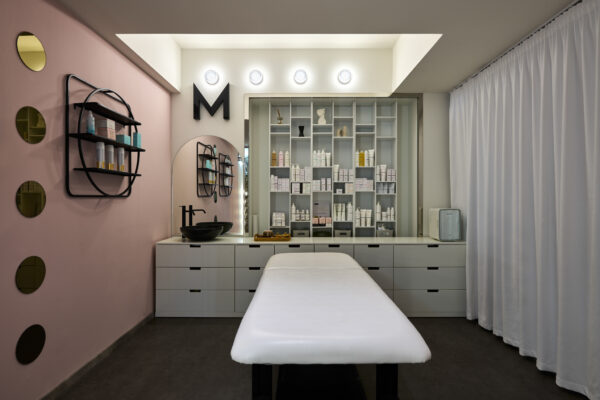
- Standard 3 — a freshly prepared workstation before every appointment. Fresh liner, packaged or visibly reprocessed instruments, no traces of the previous treatment: a well-run salon sets up a visibly new workstation for every customer.
At our three MONLIS studios — Goetheplatz, Westpark, and Karlstraße — tidy, well-ventilated rooms and a freshly prepared workstation before every appointment are part of our certified teams’ standard routine.
Tools and sterilization done right
This is where the care a salon puts into its work really shows — because what happens to the instruments between appointments isn’t something you can see at a glance.
- Standard 4 — single-use or professionally reprocessed files. Files and buffers are made of porous materials that can’t be reliably disinfected. That’s why good salons use single-use files, discarded after each customer, or swap-head files, where only the attached filing pad is replaced after each use.
- Standard 5 — genuine sterilization rather than a mere UV cabinet. A UV cabinet kills surface germs, but doesn’t sterilize instruments in the medical sense. According to the official checklist from the Munich Health Department, hot-air sterilizers are still currently legally permitted — but because of their more reliable effectiveness, the department explicitly recommends steam sterilizers of Class S or B, the kind used in an autoclave. A salon that uses a genuine autoclave is following the explicit recommendation of the Munich health authority.
- Standard 6 — VAH-listed disinfectants. VAH stands for the Association for Applied Hygiene, which lists disinfectants meeting tested standards. Having VAH-listed products within reach, with the opening date noted, is part of a professional baseline setup.
Staff training at MONLIS takes place in part at our in-house MONLIS Schule, where hygiene and sterilization standards aren’t just taught once but regularly refreshed. If you’d like to dig deeper into exactly how autoclave and UV sterilization differ: read more in our article Autoclave vs. UV Sterilization in Detail.
How the team handles preparation
Sometimes the team’s behavior tells you more about a salon’s hygiene standard than any device in the room.
- Standard 7 — fresh disposable gloves and a face mask. Fresh disposable gloves per customer are standard at a professionally run salon, along with a glove change whenever a phone, door handle, or shelf gets touched in between. A face mask while filing and drilling adds protection from fine dust and rounds out the professional picture.
- Standard 8 — visible hand disinfection before treatment. According to the Health Department’s guidelines, disinfectant should be rubbed in until hands are dry — typically about fifteen to thirty seconds. This brief gesture before every customer shows that a salon treats hygiene as a natural routine.
Our certified nail technicians at MONLIS are trained in exactly these procedures and apply them at every appointment — glove changes and hand disinfection are part of the standard routine across all three studios.
Documentation and open communication
A salon that truly upholds its standards is usually happy to talk about them, too.
- Standard 9 — a written, actively used hygiene plan. Such a plan spells out which product is used when, with what, and for how long, and ensures all staff work consistently. It’s part of properly running a business and can be reviewed on request at any time.
- Standard 10 — open answers to your questions. Perhaps the most telling standard of all: how a salon responds when you ask about its hygiene measures. A salon that knows and lives its procedures will usually explain them happily and without hesitation.
At MONLIS, we’re always open to answering questions about our hygiene standards — feel free to ask our team directly at your next appointment.
MONLIS in Munich: hygiene you can actually see
Advertisement: The following section contains promotional content about MONLIS Beauty Studios.
At MONLIS, certified professionals work with premium brands including OPI, CND Shellac, and Luxio across three locations in Munich: Goetheplatz, Westpark, and Karlstraße. According to MONLIS’s own figures, the studios have served over 10,000 customers to date. Training takes place in part at the in-house MONLIS Schule, meaning hygiene and sterilization standards aren’t just taught once but regularly refreshed.
Appointments can be booked online around the clock. Because MONLIS offers consultations in German, English, Ukrainian, and Russian, international customers in Munich can be treated without a language barrier.
What this means for you: you can and should check exactly the ten standards above at our studios too — clean surfaces, fresh instruments, visible disinfection, open answers to your questions. Visit, for example, our studio at Goetheplatz or one of the other two locations and see for yourself.
For an overview of all locations, see our three locations in Munich.
Hygiene at a nail salon isn’t a matter of luck — it’s the result of clear standards, trained teams, and open communication. At our three Munich locations, we make a point of not just claiming these standards, but demonstrating them every single day.
→ Book your manicure appointment now
This article is for general informational purposes only and does not replace advice from a physician or specialist.
Frequently Asked Questions
Look for clean surfaces, smooth rather than carpeted flooring, freshly packaged or visibly reprocessed instruments, fresh disposable gloves, visible hand disinfection, and a visible sterilizer. Equally telling: how openly a salon answers questions about its hygiene plan.
A UV cabinet kills surface germs but doesn’t fully sterilize instruments. According to the official Munich checklist, hot-air sterilizers are still legally permitted but are considered less reliable. For genuine sterilization, the authority recommends Class S or B steam sterilizers — in other words, a real autoclave.
Yes, absolutely. A written hygiene plan is part of properly running a business, and reputable salons are happy to answer such questions openly.
Part of the training takes place at our in-house MONLIS Schule, where hygiene, disinfection, and sterilization standards aren’t just taught once but regularly refreshed, so all three studios maintain consistently high standards.
For porous tools like files and buffers that can’t be reliably disinfected, single use is considered standard good practice. There’s no single, nationwide-uniform mandate for every individual tool, but good practice explicitly recommends it. Swap-head files, where only the attached filing pad is replaced after each customer, are an acceptable alternative.